
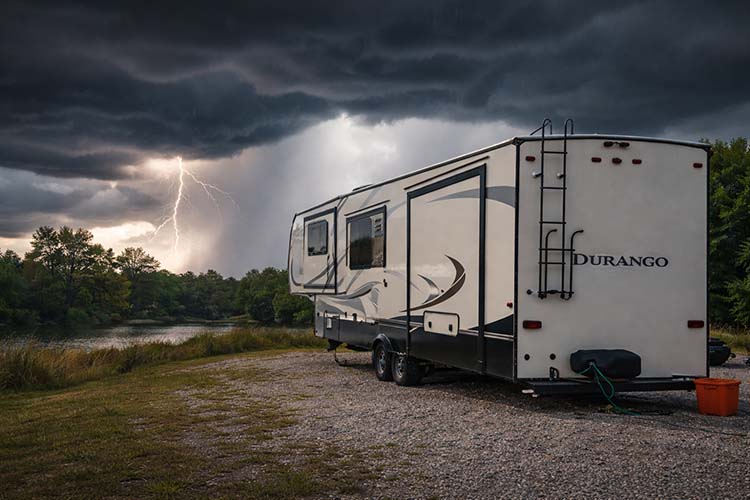
Spring in North Texas brings warmer weather, longer days, and more opportunities to get out on the road or water. It also brings something less enjoyable—strong storms, high winds, and the occasional hail event.
For RV and boat owners, these storms can cause serious damage if you’re not prepared. The good news is that a few proactive steps can go a long way in protecting your investment and avoiding costly repairs.
Here’s how to protect your RV or boat before the next storm rolls through.
Know Your Biggest Risks
Texas storms tend to bring a combination of:
- High winds
- Heavy rain
- Hail
- Sudden temperature drops
Each of these can impact your RV or boat differently. Roof damage, loose seals, water intrusion, and debris impact are some of the most common issues reported after storms.
Understanding these risks helps you prioritize what to protect first.
To stay ahead of incoming storms in North Texas, it’s helpful to monitor reliable local forecasts and alerts. Local outlets like WFAA provide up-to-date forecasts, radar, and severe weather coverage for the Dallas–Fort Worth area:
👉 https://www.wfaa.com/weather
You can also follow real-time weather updates and alerts from WBAP, which frequently covers storm activity and breaking weather conditions across North Texas:
👉 https://www.wbap.com/weather-updates/
Secure and Stabilize Your RV or Boat
Strong winds are often more damaging than rain. If your RV or boat isn’t properly secured, even moderate gusts can cause shifting or tipping.
Before a storm:
- Retract awnings and slide-outs
- Use wheel chocks and stabilizers
- Ensure trailers are properly hitched or anchored
- Tighten tie-down straps on boats
For boat owners, using transom tie-down straps and bow straps adds an extra layer of security during high winds.
The National Weather Service provides helpful guidance on preparing for severe weather here:
👉 https://www.weather.gov/safety/thunderstorm
Protect Against Hail Damage
Hail is one of the biggest threats in North Texas. Even small hailstones can damage roofs, vents, and exterior surfaces.
Some practical protection options include:
- RV covers designed for impact resistance
- Boat covers with reinforced tops
- Foam or padded covers for vulnerable areas
There are also specialized RV hail protection blankets available that can be placed over key sections during severe weather alerts.
If you know a storm is coming, even temporary protection can reduce long-term damage.
Check Seals, Seams, and Entry Points
Water intrusion is one of the most expensive issues RV and boat owners face after storms.
Before storm season ramps up:
- Inspect roof seams and caulking
- Check window and door seals
- Look for cracks or gaps in exterior panels
Even small openings can allow water to enter, especially during heavy wind-driven rain.
For a broader overview of maintenance best practices and safety, this guide from BoatUS Foundation is a helpful resource:
👉 https://www.boatus.org/boating-safety
Move or Store Strategically When Possible
Sometimes the best protection is simply getting your RV or boat out of the elements.
If a severe storm is expected:
- Move your vehicle away from trees or loose debris
- Avoid low-lying areas prone to flooding
- Park facing away from prevailing winds when possible
Covered storage can significantly reduce exposure to hail, UV damage, and debris during storms.
Don’t Forget After-the-Storm Checks
Once the storm passes, a quick inspection can prevent small issues from becoming major repairs.
Check for:
- New leaks or water spots
- Dents, cracks, or surface damage
- Loose seals or trim
- Electrical or battery issues
Catching problems early helps keep your RV or boat ready for the next trip instead of stuck in the shop.
Stay Ready This Storm Season
Severe weather is part of life in North Texas, but it doesn’t have to derail your plans or damage your investment.
With a little preparation, the right equipment, and smart storage decisions, you can significantly reduce your risk and enjoy peace of mind throughout the season.
As spring storms become more frequent, taking these steps now helps ensure your RV or boat is protected and ready whenever the weather clears.