
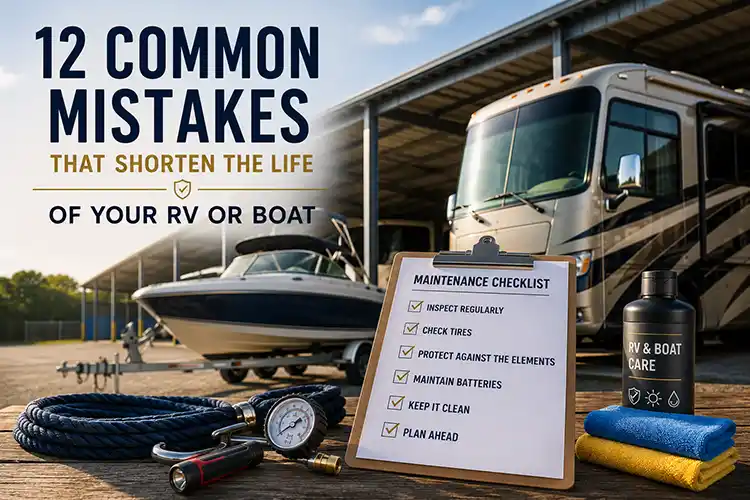
Owning an RV or boat is about making memories with family and friends, not spending weekends dealing with expensive repairs.
The good news is that many of the most common problems aren’t caused by major accidents or mechanical failures. Instead, they’re the result of small maintenance habits—or overlooked details—that slowly add up over time.
Whether you’re a first-time owner or you’ve enjoyed your RV or boat for years, avoiding these common mistakes can help protect your investment, improve reliability, and keep you ready for your next adventure.
________________________________________
1. Letting It Sit Too Long Without Inspection
One of the biggest misconceptions among owners is that simply parking an RV or boat means nothing can go wrong.
In reality, many problems develop while a vehicle is sitting still.
Rubber seals dry out, batteries slowly discharge, moisture builds up, pests look for shelter, and tires begin to lose pressure.
Even if you aren’t planning a trip, it’s a good idea to inspect your RV or boat every few weeks. Walk around it, look underneath, check the roof if it’s safe to do so, and verify that everything still looks the way it should.
________________________________________
2. Ignoring Tire Age
Many owners focus on tread depth but overlook something just as important: tire age.
Unlike passenger vehicles that wear tires through daily driving, RVs and boat trailers often spend long periods parked. During that time, sunlight, heat, and ozone slowly break down the rubber.
Small cracks in the sidewalls, known as dry rot, can eventually lead to dangerous blowouts.
Check tire pressure regularly and inspect each tire for cracking, bulges, or uneven wear. Many manufacturers recommend replacing RV and trailer tires after several years, even if plenty of tread remains.
Helpful resource:
RV Tire Safety
________________________________________
3. Forgetting About Roof Seals
Water is one of the most expensive enemies of an RV.
Roof seams, vents, skylights, antennas, and air conditioning units all rely on sealants that naturally age over time.
Small cracks may not seem important, but they can allow water to enter walls, ceilings, and insulation where damage often goes unnoticed until repairs become extensive.
Inspect roof seals at least twice a year and after severe storms.
________________________________________
4. Leaving Waste Tanks Untreated
For RV owners, proper tank maintenance makes every trip more enjoyable.
Your RV typically has three tanks:
- Fresh water
- Gray water (sink and shower water)
- Black water (toilet waste)
Leaving waste in the black or gray tanks for extended periods can lead to unpleasant odors, inaccurate tank sensors, and difficult cleaning later.
After emptying the tanks, many owners add a holding tank treatment that helps break down waste and control odors between trips.
Helpful resource:
Go RVING – RV Waste Water Basics
________________________________________
5. Forgetting the Bilge Pump
Boat owners often remember to check fuel but forget one of the most important safety systems on the boat.
The bilge is the lowest point inside the hull where water naturally collects. The bilge pump removes that water before it can create problems.
Before every outing:
- Test the pump manually
- Verify the float switch
- Check battery connections
- Make sure discharge hoses are clear
Helpful resource:
BoatUS Foundation – Bilge Pumps
________________________________________
6. Skipping Routine Washing
Bird droppings, tree sap, road grime, bugs, and lake water all slowly damage exterior finishes.
A regular wash does more than improve appearance.
It also gives you an opportunity to notice:
- Loose trim
- Seal failures
- Cracks
- Rust
- Gel coat oxidation
Cleaning becomes another inspection opportunity.
________________________________________
7. Using the Wrong Cover
Many owners purchase an inexpensive tarp believing they’re protecting their investment.
Unfortunately, plastic tarps often trap moisture, scratch finishes during windy conditions, and accelerate mildew growth.
Breathable RV covers and marine-grade boat covers provide much better long-term protection while allowing moisture to escape.
________________________________________
8. Letting Batteries Slowly Discharge
Dead batteries are one of the most common reasons vacations get delayed.
Whether it’s an RV house battery or a boat starting battery, sitting unused for months without a maintenance charger shortens battery life considerably.
A smart battery maintainer can keep batteries healthy without overcharging them.
________________________________________
9. Parking Under Trees
Shade sounds great until you consider what comes with it.
Parking beneath trees often exposes your RV or boat to:
- Bird droppings
- Tree sap
- Falling branches
- Leaves clogging drains
- Increased mildew
Choosing a cleaner storage environment reduces many of these risks.
________________________________________
10. Ignoring Texas Weather
North Texas experiences intense summer heat, hailstorms, heavy rain, and strong winds throughout the year.
August traditionally averages highs around 96°F, and the region experiences approximately 20 days over 100°F each year.
Long-term exposure to those conditions gradually fades paint, dries rubber seals, ages tires, and heats interiors to temperatures far above the outside air.
Monitoring weather forecasts and planning accordingly helps reduce unnecessary exposure.
Helpful resources:
WFAA Weather
National Weather Service – Fort Worth
________________________________________
11. Choosing Storage Based Only on Price
Monthly storage cost is important—but so is long-term value.
If you’re storing your RV or boat for several months, covered storage can help reduce exposure to:
- UV rays
- Hail
- Falling debris
- Bird droppings
- Surface temperatures
The best storage option often depends on how long you plan to store your vehicle and how much protection you’re looking for.
For many owners, preserving resale value outweighs a modest difference in monthly cost.
See: Covered vs. Outdoor RV & Boat Storage
________________________________________
12. Waiting Until the Day Before Your Trip
Perhaps the biggest mistake of all is assuming everything is ready to go the night before vacation.
Instead, spend an hour or two a week before departure checking:
- Tires
- Batteries
- Water systems
- Lights
- Safety equipment
- Trailer connections
- Fuel
- Registration
You’ll have plenty of time to address small issues before they become trip-ending problems.
________________________________________
Protect Your Investment for Years to Come
Your RV or boat is more than a vehicle—it’s the starting point for family vacations, fishing trips, weekends at the lake, and countless memories.
Avoiding these common mistakes doesn’t require advanced mechanical knowledge. It simply requires consistent attention, regular inspections, and smart storage decisions.
A little preventative care today can save thousands of dollars tomorrow while helping ensure your RV or boat is always ready for the next adventure.
________________________________________