
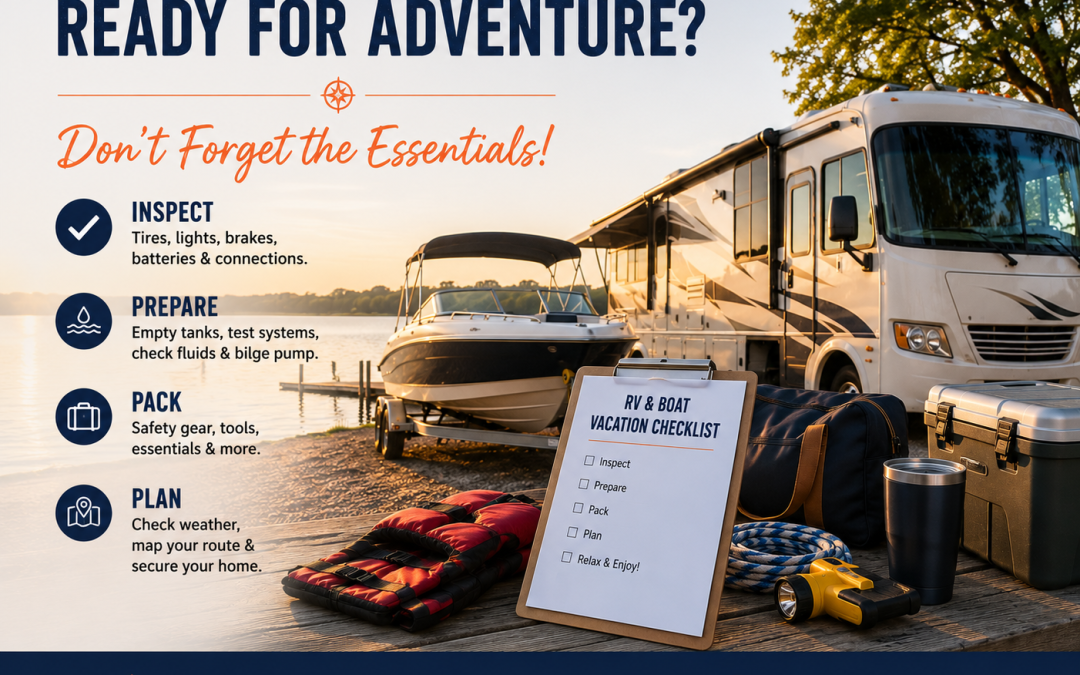
There’s nothing worse than arriving at the campground or boat ramp only to discover a dead battery, low tire pressure, or a missing piece of equipment that could have been checked before leaving home.
Whether you’re planning a weekend getaway or a longer summer vacation, a little preparation goes a long way. Taking the time to inspect your RV or boat before you leave can help prevent costly repairs, improve safety, and make your trip much more enjoyable.
Use this checklist to make sure you’re ready for a stress-free adventure.
Start With a Complete Walk-Around Inspection
Before loading up coolers, luggage, and gear, spend a few minutes walking around your RV or boat.
Look for:
- Low tire pressure
- Cracked or worn tires
- Loose trailer connections
- Damaged lights
- Missing safety equipment
- Signs of leaks or water intrusion
- Loose compartments or hatches
Many problems can be identified with a simple visual inspection. Catching them at home is much easier than dealing with them on the side of the road or at the lake.
Prepare Your RV for Travel
If your RV has been sitting for a few weeks or months, there are several systems worth checking before departure.
Empty and Maintain Your Waste Tanks
One of the most overlooked pre-trip tasks involves the RV’s holding tanks.
Most RVs contain three separate tanks:
- Fresh Water Tank – stores clean water for drinking, cooking, and washing.
- Gray Water Tank – collects wastewater from sinks and showers.
- Black Water Tank – holds waste from the toilet.
Before leaving, make sure both the gray and black tanks are emptied and rinsed. Starting a trip with partially full tanks reduces capacity and can lead to unpleasant odors.
Many RV owners also add a tank treatment after dumping. These treatments help break down waste and toilet paper, reduce odors, and keep tank sensors operating properly.
Helpful resource: 👉How to Empty the Black Water Tank
Check Your Fresh Water System
Your freshwater system should be tested before every trip.
Inspect:
- Freshwater hoses
- Water pump
- Water heater
- Connections and fittings
- Exterior water hookups
Run water through each faucet and fixture. Watch for leaks, low pressure, or unusual pump cycling that could indicate a problem.
Verify Battery and Electrical Systems
A dead battery can quickly ruin a vacation.
Check:
- Battery charge levels
- Shore power connections
- Generator operation
- Interior lighting
- Exterior lighting
- Air conditioning systems
If your batteries are more than a few years old, consider having them tested before a major trip.
Prepare Your Boat for a Day on the Water
Just like an RV, boats benefit from a thorough inspection before every outing.
Test Your Bilge Pump
The bilge is the lowest area inside the hull where water naturally collects. The bilge pump automatically removes that water and helps keep your boat safe and dry.
A failed bilge pump can allow water to accumulate and potentially damage equipment or create safety concerns.
Before every trip:
- Turn the pump on manually
- Test the float switch
- Check battery connections
- Verify proper water discharge
Helpful resource: 👉 https://www.boatus.org/study-guide/equipment/bilge-pumps
Inspect Fuel and Fluids
Check:
- Fuel level
- Engine oil
- Lower unit oil (if applicable)
- Coolant levels
- Fuel lines for cracking or wear
Many boating problems can be traced back to old fuel, deteriorated fuel lines, or neglected maintenance items.
Verify Safety Equipment
Before launching, make sure you have:
- Properly sized life jackets
- Throwable flotation device
- Fire extinguisher
- Sound-producing device
- Registration documents
Helpful boating safety resource: 👉 https://www.uscgboating.org/recreational-boaters/
Inspect Tires Carefully
Tires are one of the most common causes of travel delays.
Unlike passenger vehicles, RV and trailer tires often sit for long periods while being exposed to sunlight and heat.
Look for:
- Sidewall cracking
- Uneven wear
- Low tire pressure
- Bulges or damage
Many tire experts recommend replacing RV tires based on age rather than tread depth because deterioration can occur even when the tire appears to have plenty of life remaining.
Clean Before You Leave
A little cleaning before departure can improve both appearance and performance.
For RV owners:
- Wash bugs and debris from the windshield
- Clean roof drains and gutters
- Check roof vents
- Remove food that could spoil
For boat owners:
- Clean vinyl surfaces
- Inspect canvas covers
- Remove standing water
- Check storage compartments
Regular cleaning also gives you another opportunity to spot developing issues before they become major repairs.
Don’t Forget the Easy-to-Miss Items
Ask any experienced RV or boat owner and they’ll have a story about something they forgot.
Commonly forgotten items include:
- Boat drain plug
- Dock lines
- Trailer lock
- Wheel chocks
- RV leveling blocks
- Power adapters
- Sewer hose fittings
- Phone chargers
- Sunscreen
- Bug spray
Creating a written checklist can save a lot of frustration.
Check Weather and Travel Conditions
Conditions can change quickly across North Texas.
Before leaving:
- Review weather forecasts
- Check lake conditions
- Monitor traffic routes
- Watch for severe weather alerts
Helpful resources:
👉 https://www.wfaa.com/weather
👉 https://www.weather.gov/fwd/
Secure Your Home Before You Go
Vacation preparation shouldn’t stop with your RV or boat.
Before leaving:
- Hold mail deliveries
- Adjust thermostats
- Set light timers
- Lock gates and sheds
- Notify trusted neighbors
A few minutes of preparation can provide significant peace of mind while you’re away.
Have a Plan for When You Return
The end of a trip is often when maintenance gets neglected.
Before parking your RV or boat:
- Remove trash
- Empty waste tanks
- Wash exterior surfaces
- Check for damage
- Recharge batteries
- Restock supplies
Taking care of these items immediately after a trip makes your next adventure much easier.
For many North Texas owners, proper cleaning, inspection, and covered storage between trips can help extend the life of their investment and keep it ready for the next getaway.
Ready for Adventure
A successful vacation often starts long before you leave the driveway. By taking a little time to inspect, clean, and prepare your RV or boat, you’ll spend less time dealing with problems and more time making memories with family and friends.
The goal isn’t perfection—it’s preparation. And when you’ve covered the basics, you can hit the road or lake with confidence.