
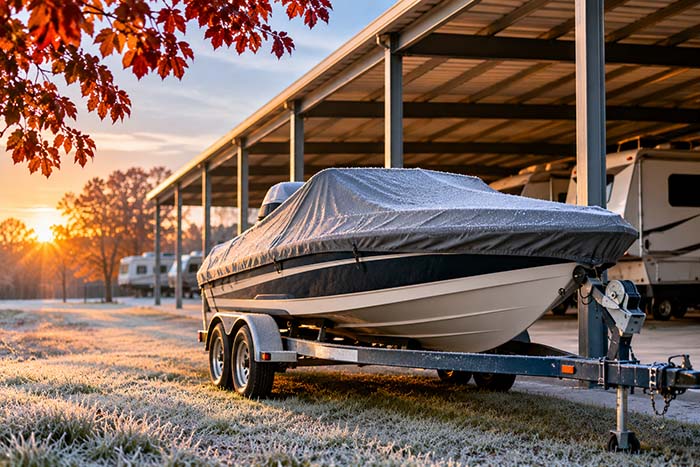
North Texas winters can be unpredictable. One week, temperatures may climb into the 60s, making it tempting to head out for an afternoon on Lake Ray Roberts or Lake Texoma. The next, an Arctic cold front can bring freezing temperatures that last for days.
For boat owners, those temperature swings create a challenge. Unlike northern states where winterizing a boat is practically automatic, North Texas offers enough mild winter days that it’s easy to put off preparing your boat for colder weather.
But the numbers tell a different story.
According to the National Weather Service, Dallas-Fort Worth averages approximately 29 days with freezing temperatures each year. The average first freeze occurs around November 22, and the average last freeze around March 12. Temperatures can fall into the teens during stronger cold fronts, and the February 2021 winter storm brought temperatures as low as -2°F at DFW.
For boat owners, the danger isn’t just the temperature outside. It’s what happens when water trapped inside an engine, pump, plumbing line or other component freezes and expands.
Whether you own a fishing boat, pontoon, ski boat or larger recreational vessel, proper winter preparation can help protect your investment and make getting back on the water easier when warmer weather returns.
Here are nine common winter boat storage mistakes North Texas owners should avoid, along with practical ways to prevent them.
1. Assuming North Texas Winters Are Too Mild to Damage a Boat
Perhaps the biggest mistake boat owners make is assuming that winterization isn’t necessary because they live in Texas.
It’s understandable. North Texas frequently experiences pleasant winter afternoons, and some boat owners continue fishing and boating throughout the colder months.
But a few warm days don’t eliminate the possibility of a hard freeze.
The National Weather Service reports that the Dallas-Fort Worth area averages 29 freezes per season. While the typical January high is around 56°F, temperatures can fall much lower during winter cold fronts.
A boat that sits outdoors during several consecutive days of freezing weather may be exposed to conditions capable of damaging engines, plumbing and other equipment.
How to avoid this mistake: Prepare your boat for freezing temperatures before winter arrives, even if you expect to use it occasionally during the season. Follow the winterization requirements for your specific engine and onboard systems, and monitor forecasts throughout the winter.
Don’t wait until an Arctic front is approaching to begin preparing your boat.
2. Leaving Water Inside the Engine or Cooling System
Of all the winter boat storage mistakes, this can be one of the most expensive.
Many marine engines use water as part of their cooling systems. Depending on the engine design, water may remain inside passages, pumps, hoses, manifolds or other components after the boat leaves the lake.
When trapped water freezes, it expands. That expansion can crack engine blocks, exhaust manifolds and other expensive parts.
According to BoatUS winterization guidance, freeze-related engine damage is a major source of winter storage claims.
The proper winterization procedure depends on whether your boat has an outboard, sterndrive, inboard or another engine configuration. Some systems require draining, some require manufacturer-approved antifreeze procedures, and others have specific self-draining or storage instructions.
How to avoid this mistake: Consult the engine manufacturer’s winterization instructions. If you’re uncertain about the procedure, have a qualified marine technician handle it.
Don’t assume that briefly starting the engine, tilting it into a particular position or pouring antifreeze into an accessible opening will adequately protect every cooling-system component.
Money-saving tip: Professional winterization may cost far less than repairing or replacing a freeze-damaged marine engine.
3. Forgetting About Livewells, Pumps and Onboard Plumbing
Your engine isn’t the only place where water can cause problems.
Many fishing boats, pontoons and larger recreational vessels have additional water systems that require attention before freezing weather arrives.
Depending on the boat, these may include livewells, baitwells, washdown pumps, freshwater tanks, sinks, showers, toilets, water heaters and associated plumbing.
Even small amounts of trapped water can damage pumps, fittings, valves and hoses when temperatures drop sufficiently.
For example, a fishing boat’s livewell pump may contain water even after the livewell itself appears empty.
How to avoid this mistake: Identify every system on your boat that uses or holds water. Drain and winterize each component according to its manufacturer’s instructions.
Where antifreeze is specified, use the appropriate marine/RV product and follow the equipment manufacturer’s procedure. Automotive engine antifreeze should not be substituted for potable-water-system antifreeze.
If your boat has a freshwater system, make sure the winterization process includes all connected fixtures and equipment.
Money-saving tip: A few overlooked fittings can turn into leaks and water damage when you put the boat back into service in spring.
4. Neglecting the Battery During Winter Storage
A boat battery can lose charge while sitting unused, especially when onboard electronics continue drawing small amounts of power.
Extended inactivity can shorten battery life, and a deeply discharged battery may not recover fully.
Cold temperatures also reduce available battery performance. Depending on battery chemistry and state of charge, freezing conditions can create additional concerns.
Before storing your boat, inspect the battery terminals, clean corrosion and make sure connections are secure.
Follow the battery manufacturer’s recommendations for charging, disconnecting and long-term storage. Some owners use an appropriate marine battery maintainer, while others remove batteries for storage in a suitable location.
Lithium batteries require different handling than traditional lead-acid batteries, particularly regarding charging temperatures.
How to avoid this mistake: Check battery condition before storage and establish a charging or maintenance routine appropriate for the battery type.
Money-saving tip: Proper battery care can help extend battery life and reduce the chances of discovering a dead battery on your first spring outing.
For additional advice on equipment that sits unused, see our How Long Can an RV or Boat Sit Unused? A Storage & Maintenance Guide.
5. Ignoring Fuel and Engine Maintenance Before Storage
Fuel and engine maintenance shouldn’t be an afterthought when preparing your boat for winter.
Gasoline can deteriorate during extended storage, and fuel containing ethanol can create additional concerns when moisture enters the fuel system.
Depending on your engine and fuel system, the manufacturer may recommend specific fuel treatment, tank preparation and other storage procedures.
Winter preparation is also a good opportunity to check engine oil, filters, lower-unit lubricant and other maintenance items.
For some marine engines, changing the oil before extended storage helps remove contaminants that shouldn’t remain in the engine for months.
How to avoid this mistake: Follow your engine manufacturer’s storage recommendations, including fuel stabilization, oil changes, corrosion protection and any other required procedures.
Avoid assuming that the same fuel-storage method applies to every marine engine.
Money-saving tip: Addressing fuel and maintenance concerns before storage may help prevent difficult starts and costly repairs when boating season returns.
6. Putting the Boat Away While It’s Still Damp
Moisture can cause problems even when temperatures stay above freezing.
A boat stored with wet carpet, damp compartments, soaked upholstery or standing water may develop mildew, unpleasant odors and deterioration of interior materials.
Trapped moisture can also contribute to corrosion and damage to electrical components.
Before storing your boat, clean the interior, remove trash and food, and allow wet surfaces to dry thoroughly.
Check storage compartments, bilge areas and other places where water can collect.
Make sure drainage openings are properly managed according to the boat manufacturer’s instructions, and store the boat in a position that promotes appropriate drainage.
How to avoid this mistake: Give the boat time to dry before covering it. Use ventilation methods appropriate for the boat and cover, and inspect periodically for moisture buildup.
Money-saving tip: Preventing mildew and water damage is usually much easier than replacing damaged upholstery, carpeting or interior materials.
Our off-season boat and RV protection checklist offers additional tips for preparing recreational vehicles and boats for extended storage.
7. Forgetting That Your Boat Trailer Needs Winter Maintenance, Too
When preparing a boat for winter, it’s easy to focus on the vessel and overlook the trailer underneath it.
But trailer problems can leave you stranded before you ever reach the boat ramp.
Inspect trailer tires for proper inflation, cracking, uneven wear and signs of aging. Trailer tires may deteriorate over time even when they have plenty of tread remaining.
Check wheel bearings, brakes, lights, wiring, safety chains and the coupler according to the trailer manufacturer’s maintenance schedule.
Pay particular attention to wheel bearings and brakes if the trailer has been repeatedly submerged during launching and retrieval.
Winter storage is also a good time to inspect the trailer frame for corrosion and check that the boat is properly supported.
How to avoid this mistake: Treat the trailer as a separate piece of equipment with its own maintenance requirements.
Money-saving tip: A neglected wheel bearing or damaged tire can turn a short trip to Lake Texoma into an expensive roadside problem.
8. Using the Wrong Boat Cover or Allowing Water to Collect
A boat cover can provide valuable protection against sunlight, rain, leaves and debris, but an improperly fitted cover may create additional problems.
Loose covers can flap in the wind and damage finishes. Poorly supported covers may collect rainwater, while inadequate ventilation can trap moisture underneath.
Winter storms can also bring ice or occasional snow to North Texas, adding weight to a cover that isn’t properly supported.
Choose a cover designed for your boat’s configuration and follow the manufacturer’s installation instructions.
Make sure the cover sheds water appropriately, is securely fastened and allows any required ventilation.
Check the cover periodically, particularly after strong winds or heavy precipitation.
How to avoid this mistake: Don’t assume that simply throwing a tarp over the boat provides adequate protection. Use a properly fitted cover with appropriate support and ventilation.
Money-saving tip: A quality cover and regular inspections can help protect upholstery, electronics, finishes and other components from avoidable damage.
9. Choosing Winter Boat Storage Based on Price Alone
Storage cost matters, but it shouldn’t be the only consideration when deciding where to keep your boat during winter.
North Texas boats face several environmental challenges, including strong sunlight, heavy rain, wind, occasional hail and freezing temperatures.
Different storage arrangements provide different levels of protection.
Outdoor storage can be an economical choice for properly prepared boats, especially when paired with an appropriate cover.
Canopy or covered storage can reduce direct exposure to sunlight and precipitation.
Three-sided storage may offer additional protection from wind-driven weather, while enclosed storage provides a more complete physical barrier against outdoor conditions.
However, covered or enclosed storage does not automatically prevent freeze damage. Unless a space is appropriately heated or climate-controlled, temperatures inside may still fall below freezing.
Winterization remains essential regardless of the storage type.
Other considerations include gated access, security cameras, lighting, accessibility and whether the facility provides enough room to maneuver a boat and trailer.
How to avoid this mistake: Compare storage options based on your boat’s size, value, maintenance needs and expected winter use, not simply the monthly rate.
At Stover Creek Storage in Celina, Texas, boat owners can choose from outdoor, canopy, three-sided and enclosed storage options. The facility also offers gated access, surveillance and convenient access for owners who want to retrieve their boats during the winter.
If you’re weighing your options, read our guide to choosing the right storage for your RV or boat: enclosed, three-sided or canopy.
Quick Winter Boat Storage Checklist
Before putting your boat away for winter, use this checklist as a starting point:
- ☐ Review your engine manufacturer’s winterization requirements.
- ☐ Drain or protect engine cooling-system components as specified.
- ☐ Winterize livewells, pumps, tanks and onboard plumbing.
- ☐ Check battery condition and establish an appropriate charging plan.
- ☐ Prepare fuel and complete recommended engine maintenance.
- ☐ Clean and thoroughly dry the boat’s interior.
- ☐ Inspect trailer tires, bearings, brakes and lights.
- ☐ Install a properly fitted, supported and ventilated boat cover.
- ☐ Choose a storage arrangement appropriate for your boat.
- ☐ Monitor winter forecasts and inspect the boat periodically.
Remember that this is a general checklist. Your boat and engine manuals should determine the specific procedures required for your equipment.
Can You Still Use Your Boat During a North Texas Winter?
Absolutely. Many North Texas boat owners enjoy fishing and recreational boating throughout the winter, especially during stretches of mild weather.
Lake Ray Roberts, Lake Texoma, Lake Lewisville and other area lakes remain popular destinations for anglers.
But occasional winter use doesn’t eliminate the need to protect your equipment from freezing temperatures.
If you plan to use your boat during winter, follow the manufacturer’s procedures for protecting the engine and water systems after each outing. That may mean repeating certain winterization steps before the next freeze.
Also remember that winter boating introduces additional safety concerns. Cold water can be dangerous even when the air temperature feels comfortable.
Check the forecast, wear an appropriate life jacket, carry necessary safety equipment and let someone know your plans before heading out.
Protect Your Boat Now and Enjoy It Later
Winter boat storage in North Texas isn’t about preparing for months of snow and ice. It’s about protecting your investment from the unpredictable conditions that make Texas winters unique.
A few warm afternoons can quickly give way to freezing temperatures, and one overlooked maintenance item can lead to expensive damage.
By winterizing your engine and water systems, maintaining your battery and trailer, controlling moisture and choosing an appropriate storage option, you can help keep your boat ready for the next season.
At Stover Creek Storage, we understand that boats are meant to be enjoyed, not constantly repaired. Our boat storage options in Celina help North Texas owners protect their equipment between adventures while keeping it accessible when it’s time to head back to the lake.
A little preparation before winter can make getting back on the water much easier when warmer weather returns.